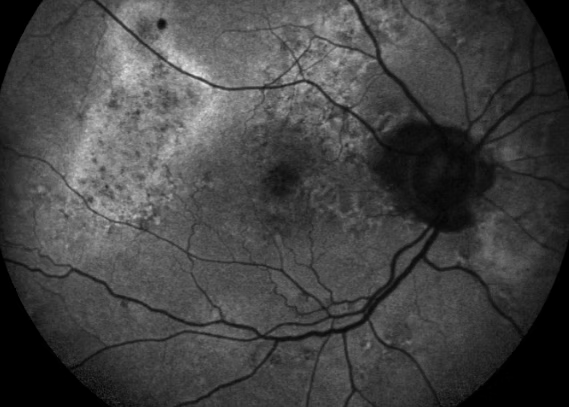
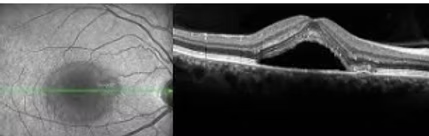
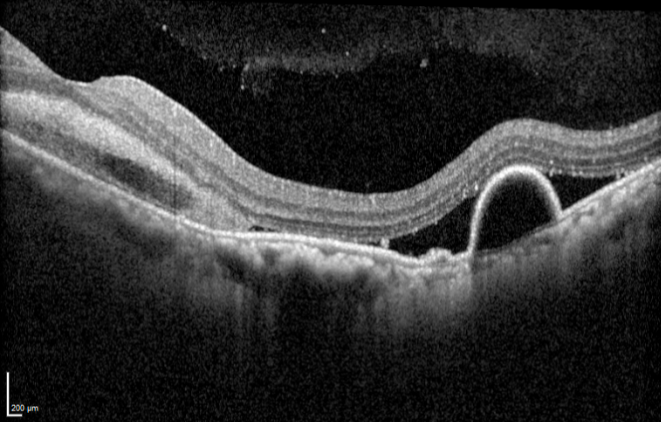
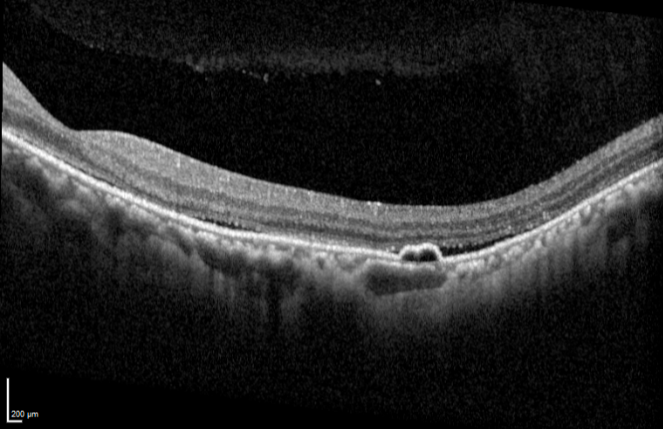
CSCR affects the retina which is the light sensitive layer at the back of your eye which captures images and enables you to see. The macula is the part of your retina that is critical for your vision. A layer of cells known as the retinal pigment epithelial cells (or RPE cells) have a pump action that helps to nourish the retina.
There is also a blood vessel layer beneath the retina is known as the choroid- abnormality to the function of the RPE cells or the choroid may sometimes lead to a build-up of fluid between the outer layers of the retina. This condition is known as central serous chorioretinopathy or CSCR.
Steroids are a known risk factor for the development of CSCR. These include steroids in different forms such as inhalers for asthma, nasal spray for hay fever, steroid cream for eczema and steroid tablets such as prednisolone. Rarely, in a condition (known as Cushing syndrome), an over production of the body’s natural steroid hormone could lead to the development of CSCR.
A major stressful event, either work-related or personal, is believed to trigger the development of CSCR in some patients.
Research has shown that certain personality types (particularly those who are hard-driven and competitive), are more at risk of developing this condition.
There are ongoing studies suggesting some patients may have changes in certain genes that can trigger CSCR when exposed to certain environmental factors.
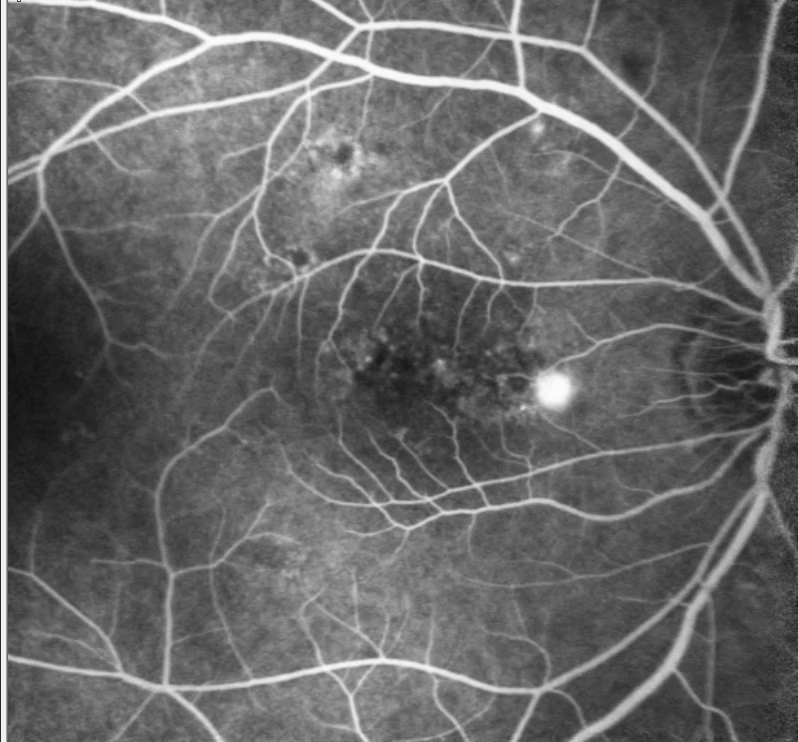
During this test a coloured dye is injected into your arm, followed by a series of photographs taken of your retina using a special camera. This test helps to identify the leaking area in your retina.
The information found through these investigations will help to develop your individual treatment plan and rule out other similar conditions if the findings are unusual. This is not done on every patient and Ms Heng will decide if you would need these further investigations.
A small percentage of patients may develop a growth of abnormal blood vessels under the retina (called choroidal neovascular membrane-CNVM), which leaks fluid in the retina. This can be treated with anti-VEGF injections in the eye.
A small proportion of patients with long-term CSCR develop loss of function of a layer of cells called RPE cells (retinal pigment epithelial) which can result in permanent visual impairment.
In approximately 85% of cases, the fluid in the retina settles on its own within six months and does not require any treatment. Any known triggers such as corticosteroid use should be reviewed and stopped if this is medically appropriate.
Any other medical conditions that can act as a trigger should also be treated. Some patients may experience frequent flare ups, leading to a gradual worsening of their vision. In these cases, treatment may need to be considered
PDT is a form of ‘cold laser’ treatment, using non-toxic light sensitive dye. The dye molecules are triggered by infrared light which stops the leakage of fluid in the retina. This results in removing the retinal fluid in about 80% of eyes with one to two treatment sessions, with a reduction in symptoms of distortion and improvement of vision.
However, it has also been found that not all patients get their vision back, despite the retinal fluid being removed. This procedure does carry some risks (estimated 1% risk of vision loss). Ms Heng will discuss the suitability of treatment in your specific case.
There are some recent studies that have shown the effectiveness of certain tablets in reducing the fluid in CSCR. Eplerenone and Spironolactone are mineralocorticoid inhibitors, commonly used to lower blood pressure or treat heart failure. These medications have shown an improvement in CSCR symptoms for some patients, although other studies have not shown benefit.
Further studies are currently being carried out to evaluate the role of these treatments. When on this treatment, these drugs may cause side effects in some patients including changing the salt (potassium) level in the blood which will need monitoring. Other potential side effects which vary by drug will be discussed by your doctor during the clinic consultation.
In a subgroup of patients , there may be development of choroidal neovascularisation and a course of antivegf would be warranted in this small proportion of cases.
Treatment of CSR is specific and complex, Ms Heng will advise, monitor, and perform necessary imaging to optimise your treatment outcomes. We have all the available treatment modalities in our clinic.

Post eylea 2mg

Post eylea 2mg


Yes, some studies have shown that acute CSCR presents with color deficiency and the most common color deficiency is blue.