

 English
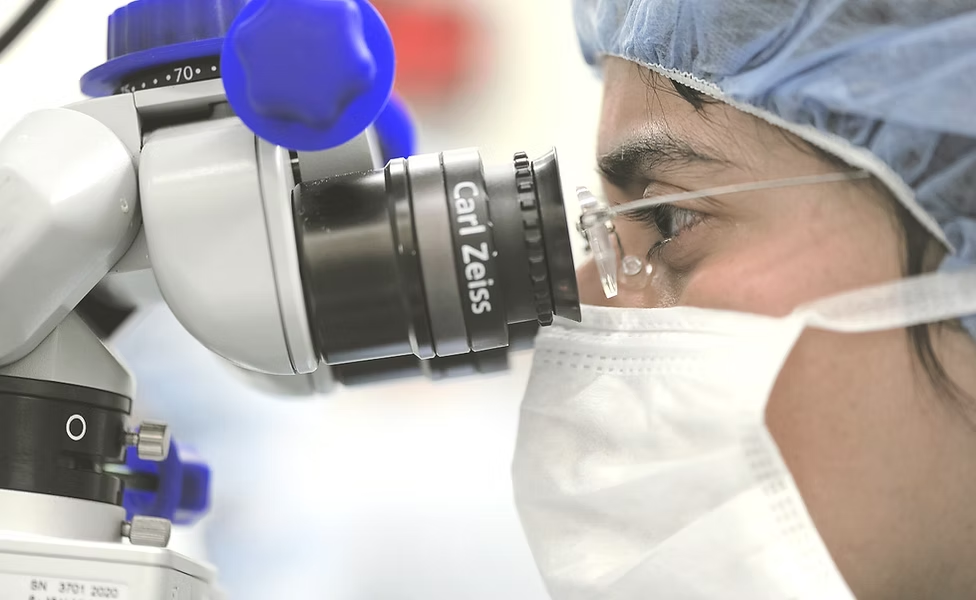




Cataract surgery effectively restores clarity and sharpness to your vision by removing the cloudy lens that obscures your sight. Following surgery, many patients experience a significant improvement in visual acuity, allowing them to see more clearly and with greater detail than before. Objects appear sharper, colours appear more vibrant, and overall visual perception is enhanced, leading to a clearer and more vivid world.
Private retina laser therapy centres are equipped with state-of-the-art laser systems and diagnostic equipment, allowing for precise and targeted treatment of retinal disorders. Advanced technology enables ophthalmologists to deliver optimal outcomes while minimising the risk of complications. Examples of these include newer technologies such as softer lasers for the macular, micropulse or nanosecond lasers which has been shown in research to reduce adjuvant damage on the macular as compared to conventional laser therapy.
Cataracts can distort colour perception, causing colours to appear faded or dull. Following cataract surgery, many patients report a remarkable enhancement in colour perception, with colours appearing brighter, more vibrant, and true to life. The removal of the cloudy lens allows light to pass through the eye unimpeded, restoring the full spectrum of colours and enhancing the richness and depth of visual experiences.
One of the most significant benefits of cataract surgery is the reduction in dependence on corrective eyewear, such as glasses or contact lenses. By replacing the clouded natural lens with a clear artificial intraocular lens (IOL), cataract surgery can correct refractive errors and improve visual clarity at various distances.
Many patients find that they no longer need glasses or contacts for everyday activities like reading, driving, or watching TV, leading to greater convenience, freedom, and confidence in their daily lives.
Beyond the tangible improvements in visual function, cataract surgery has a profound impact on patients' overall quality of life. Restoring clear vision allows individuals to engage more fully in activities they enjoy, maintain independence, and participate in social interactions with confidence. With clearer vision, patients experience enhanced mobility, safety, and productivity, leading to a more fulfilling and satisfying lifestyle.
Cataract surgery offers a comprehensive array of benefits that extend beyond mere visual improvement. By restoring clarity, contrast sensitivity, and colour perception, reducing reliance on corrective eyewear, and enhancing overall quality of life, cataract surgery empowers individuals to enjoy a brighter, clearer future. If you're experiencing the symptoms of cataracts, don't hesitate to explore the transformative potential of cataract surgery and reclaim your vision and vitality.
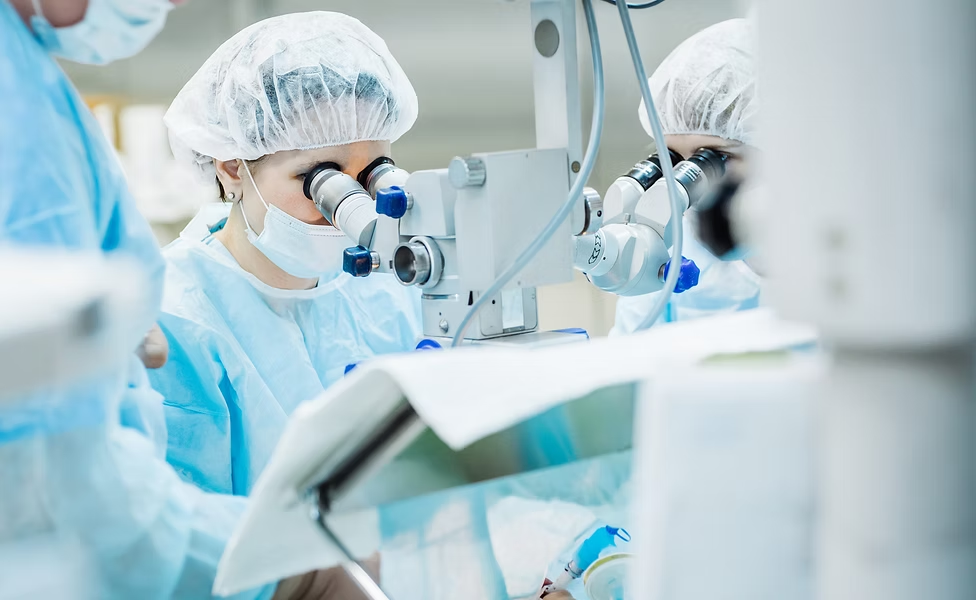
Our comprehensive cataract removal surgery process is designed to provide patients with safe, effective, and personalised care from pre-operative evaluation to post-operative recovery.
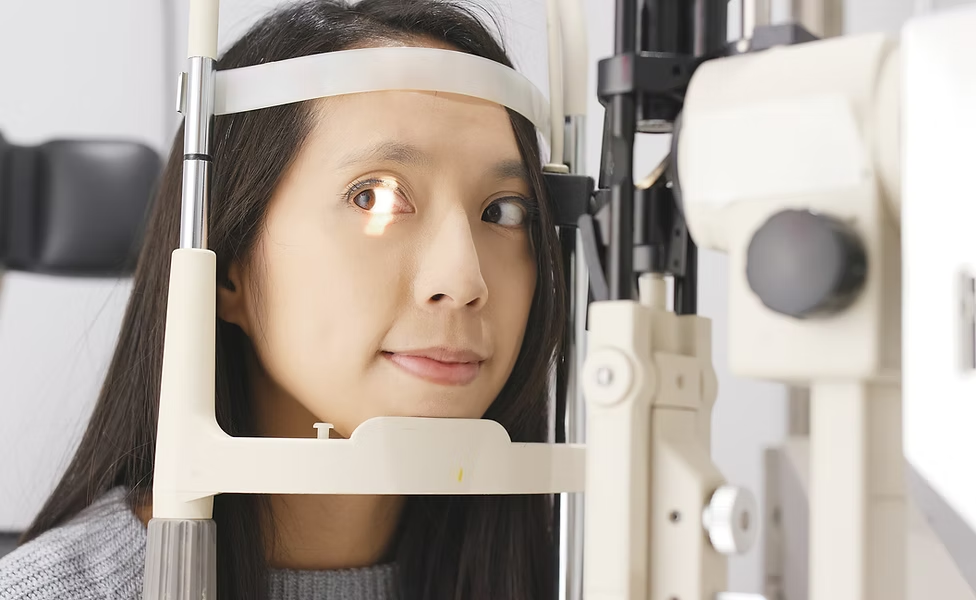
Before undergoing cataract surgery, patients will undergo a thorough preoperative evaluation to assess their ocular health, determine the severity of cataracts, and identify any underlying eye conditions that may affect surgical outcomes.
This evaluation typically includes a comprehensive eye examination, measurement of visual acuity, assessment of lens opacity using specialised imaging techniques (e.g., optical coherence tomography), biometry (to choose an appropriate intraocular lens to replace) and discussion of medical history and lifestyle factors.

Cataract surgery is a minimally invasive outpatient procedure performed under local anaesthesia to ensure patient comfort and safety. During the surgery, the cloudy lens is gently fragmented and removed using a technique called phacoemulsification, which involves the use of ultrasonic energy to break down the lens material.
Once the cataract is removed, a clear artificial intraocular lens (IOL) is implanted in its place to restore vision. The choice of IOL depends on factors such as the patient’s visual needs, lifestyle preferences, and any pre-existing ocular conditions (e.g., astigmatism).

Following cataract surgery, patients will receive detailed post-operative instructions and guidance to facilitate a smooth recovery and optimal visual outcomes. While recovery times may vary, most patients experience significant improvement in vision within the first few days to weeks following surgery.
It is essential to follow all post-operative instructions provided by your surgeon, including the use of prescribed eye drops, avoiding strenuous activities, and attending follow-up appointments to monitor healing progress and address any concerns.
Multifocal and toric IOLs are premium lens options that offer enhanced visual performance at multiple distances and can correct pre-existing astigmatism. Multifocal IOLs utilise diffractive or refractive optical technology to provide simultaneous vision at near, intermediate, and distance ranges, reducing the need for glasses or contact lenses for most daily activities.
Extended Depth of Focus (EDOF) Lenses: These lenses correct for distance and intermediate vision but reading glasses are likely required for close or reading work.
This is an increasingly popular option for patients with modern gadgets such as the iPad. Most of our daily living now involves mainly intermediate distances. Thus, having distance and intermediate vision may cover the vast majority of needs for many patients, particularly those with mild underlying ocular disease. This lens induced minimal glare as compared to the latter.

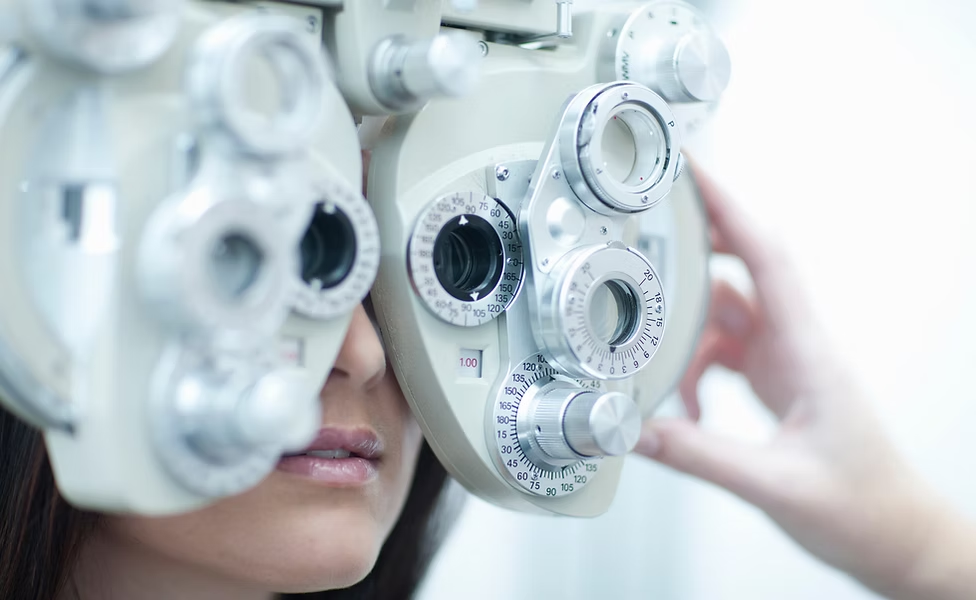
Each cataract surgery is meticulously planned and customised to address the unique visual needs and ocular characteristics of the patient. By integrating advanced diagnostic imaging, intraoperative guidance systems, and patient-specific data, surgeons can tailor the surgical approach, lens selection, and incision placement to optimise visual outcomes and patient satisfaction.
Don’t let cataracts diminish your quality of life or limit your visual potential. Contact us today to schedule a comprehensive consultation and take the first step towards achieving clearer vision and a brighter future. With our advanced technology, personalised care, and experienced surgical team, clear vision awaits you!

Modern cataract surgical techniques have vastly improved the outcomes of cataract surgery. In the UK, we have a UK national cataract audit database that collates and looks at rates of complications across different sites and hospitals. Collated data published indicate that less than 1 in 200 patients now experience severe loss of vision following cataract surgery.
The major complication of cataract surgery, posterior capsular rupture or PCR is now less than 1% of surgeries. This is dependent on individual risk profile, and higher risks or complex cataracts will have a higher risk of surgery.

6/6 vision measures how sharp your eyesight is at a distance of 20 feet or 6 meters compared to someone with normal vision.
This is usually referred to as your distant vision, but your overall visual function also depends on other factors such as peripheral visual fields, depth perception, and colour vision. As much as we talk about the ‘perfect vision’, only approximately 35% of adults naturally see 6/6 without any correction.

Yes, it is possible to achieve 6/6 vision following cataract surgery. However, this is also dependent on every individual patient’s underlying co-morbidities such as diabetes, and/or if they have any ocular pathologies such as diabetic retinopathy, glaucoma, age-related macular degeneration, and high myopia as examples.
The UK National Cataract Audit Database of 55K cataract surgeries have shown that
Hence, the majority of patients will achieve very good functional vision of 6/12 and better and only half will achieve 6/6 vision.
Ms Heng is a complex cataract surgeon. Her case mix over the last 3 quarters has a 50% of patients who have multiple comorbidities including Parkinson’s, diabetes, hypertension and close to 70% with severe ocular co-pathologies including AMD, high myopia, uveitis, diabetic retinopathy, and post vitrectomy as example.
More than 20% of her case mix are brunescent or very advanced cataracts and more than 15% are very high myopia, with axial length (long eyeballs) more than 26mm. These are cases with higher risk of surgical complications.
1. Jaycock P, Johnston RL, Taylor H, Adams M, Tole DM, Galloway P, Canning C, Sparrow JM and the UK EPR User Group. The Cataract National Dataset electronic multi-centre audit of 55 567 operations: updating benchmark standards of care in the United Kingdom and internationally. Eye (2009) 23, 38-49
2. Gale RP, Saldana M, Johnston RL, Zuberbuhler B, McKibbon M. Benchmark standards for refractive outcomes after NHS cataract surgery. Eye (2009) 23, 149-152
Ms Heng is also on the cataract pathways for major insurers.
Cataract surgery is a minimally invasive outpatient procedure performed under local anaesthesia to ensure patient comfort and safety. During the surgery, the cloudy lens is gently fragmented and removed using a technique called phacoemulsification, which involves the use of ultrasonic energy to break down the lens material.
Once the cataract is removed, a clear artificial intraocular lens (IOL) is implanted in its place to restore vision. The choice of IOL depends on factors such as the patient’s visual needs, lifestyle preferences, and any pre-existing ocular conditions (e.g., astigmatism).
Cataract surgery has gone through technological advancements in the last decades. Commonly, we perform phacoemulsification technique in majority of the cases.
However, as with every medical procedures and surgeries, there are risks involved.
The risk of serious complications developing as a result of cataract surgery is estimated at around 1 in 50 cases.
These can include:
Most of these serious complications can be treated with either medicine or surgery.
There is a very small risk – around 1 in 1,000 – of permanent sight loss in the treated eye as a direct result of the operation.
In cases of complex cataract surgeries due to underlying eye or systemic conditions, Ms Heng will individualise your risk profile and define the possible complications and outcomes as well as risk vs benefit profile for the individual patients.
You will be given post operative instructions for your cataract surgery aftercare following your operation, including information regarding treatment. You will also be given a post operative follow up appointment to see Ms Heng after the surgery.
You will expect to return home couple of hours after the surgery depending on your type of anesthesia chosen.
Cataract surgery recovery times are different for every person. Usually, the recovery time for cataract surgery is fairly quick at approximately 3-4 days.
During your cataract surgery recovery, it is normal for your vision to take a few days to improve. Your eyes may additionally be sore, scratchy and light sensitive during this period. You will be given both antibiotic and anti-inflammatory drops following your surgery. Most Cataract surgery is performed as a day procedure.You should be able to return to work a few days after your operation, depending on your occupation. If you perform a job that is physically demanding, you may require a longer period of recovery.
Depending on the intraocular lens suitably chosen for your surgery, you may require glasses for distance or reading or both after cataract surgery. Premium lenses such as multifocal or EDOF lens is designed for superior refractive outcome to negate the need for glasses. HOwever, not all patients will be suitable for this and this will be discussed at your initial consultation.