Key Takeaways
- Postoperative inflammation is normal after cataract surgery, but most cases are mild and resolve quickly with standard steroid eye drops.
- Certain patients are at higher risk for prolonged inflammation, including those with diabetes, uveitis, younger age, surgical complications, or dense cataracts requiring longer procedures.
- Effective management relies on appropriate anti-inflammatory treatment and patient compliance, with options ranging from topical drops to intraoperative steroid injections for high-risk individuals.
- New treatment approaches, such as dropless regimens and sustained drug delivery systems, show promise, but careful patient selection is essential to balance benefits and potential side effects.
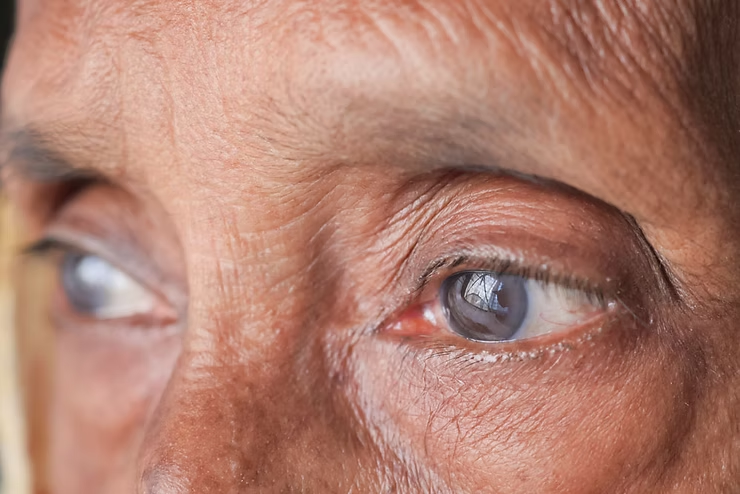
Whilst cataract surgery is far more advanced than decades ago, and the risks of inflammation have decreased, there will still be some inflammation following surgery. Majority of patients will recover very quickly, but approximately 0.24 percent to 7.3 percent of cases1 will have more severe and protracted course of inflammation.
After gearing up for the surgery, and having a successful operation, patients may feel despondent when the vision does not improve or they have a prolonged journey of eye drops for prolonged or recurrent inflammation. Here, we discuss identifying at risk patients, and how to manage post-cataract surgery inflammation.
Who is at Risk for Postop Inflammation
Patients with a history of uveitis or diabetes are at higher risks of inflammation which may progress to postoperative macular oedema. Younger patients or patients with genetic predisposition tend to mount more significant inflammatory responses.
During the surgical procedure, patients who have dense cataracts that require more ultrasonic energy during the surgery to break the cataract up, longer duration of surgery, surgical complication, retained lens matter are also factors contributing to more severe inflammation or prolonged inflammation.
A study conducted at the Montefiore Medical Center in New York found 5.7% of persistent inflammation after complex cataract surgery was observed in nine of 156 cases (5.7 percent) regardless of gender, age, ethnicity or intraoperative use of iris-retention devices.1
Another cause of inflammation is that the postoperative anti-inflammatory management was insufficient, either due to patient compliance or insufficient treatment given by the surgeon.
Risk Factors and Management Approaches in Post–Cataract Surgery Inflammation
Although most patients experience only mild and short-lived inflammation after cataract surgery, certain individuals are more prone to prolonged or severe postoperative reactions. Recognizing these risk factors allows surgeons to adjust treatment plans and apply preventive strategies when needed.
The following table summarizes the main patient-related and surgery-related factors that increase the likelihood of inflammation, as well as the corresponding management options described in the article.
Table: Factors Influencing Post–Cataract Surgery Inflammation and Management Strategies
| Category | Specific Factors Identified in the Article | Resulting Concerns | Management Approaches Mentioned |
| Patient Medical History | History of uveitis, diabetes | Higher risk of significant inflammation and postoperative macular oedema | More intensive steroid drop regimens, addition of NSAID drops, or intraoperative steroid injections |
| Patient Characteristics | Younger age, genetic predisposition | Tendency to mount stronger inflammatory responses | Closer monitoring and stronger anti-inflammatory therapy |
| Surgical Complexity | Dense cataracts requiring more ultrasonic energy, longer surgery time | Greater postoperative inflammation | Enhanced postoperative anti-inflammatory treatment |
| Surgical Complications | Retained lens matter, intraoperative complications | More severe or prolonged inflammation | Aggressive medical management and careful follow-up |
| Treatment Compliance | Poor adherence to prescribed eye drops | Inadequate inflammation control | Consideration of intraoperative “dropless” regimens or alternative drug-delivery systems |
| Pre-existing Eye Conditions | Diabetic macular oedema, uveitis | Increased risk of persistent inflammation | Combined procedures such as cataract surgery with intravitreal steroid injection or steroid implant |
What if the surgery has been uneventful or considered a routine surgery?
All patients will mount an inflammatory response following cataract surgery. Majority mild, some more severe even if the surgery was uneventful. Patients will be sent home with steroid drops over 4-6 weeks depending on the patient’s profile and surgeon’s preferred regimen.
In some patients with underlying risk factors such as uveitis or diabetes, or where patients had previous episode of prolonged or more severe inflammation, the surgeon may decide during the surgery to perform addition procedures such as steroid injection subconjunctival or subtenons or to start on more intense regimen of topical steroid drops 2 hourly or/and add on an NSAID drop such as ketorolac or diclofenac eye drops.
In some patients, such as uveitic patients or diabetic patients with known macular oedema, decision may be made for double procedure, cataract surgery with intravitreal steroid injection or steroid implant such as ozurdex. The intention of this is to control the inflammation expected and treat the pre-existing macular oedema.
Occasionally, in patients who may be thought to have post op eye drop compliance issues or have lack of support to assist in post op care, then this presents as an issue. This is especially prevalent in the elderly population. There is ongoing research studying new ways to deliver medications.
One example is a liposomal drug delivery system that’s currently in a Phase I/II trial,2 which is administered as a single subconjunctival injection intraoperatively. Early studies have presented positive data that this method is safe and effective. This is not as yet available on the market.
Intraoperative “Dropless” Regimen
Another method that is gaining popularity amongst cataract surgeons is intraoperative dropless regimen. This is done as an injection combining high dose steroid and antibiotics at the end of the cataract surgery. This is particularly helpful for non compliant patients and can be considered in the majority of cataract surgical patients.
However, this is not without side effects. Dropless regimens may result in blurry vision or floaters for weeks following surgery. Some patients may be prone to pressure rises and may not be suitable for patients with pre-existing glaucoma. In diabetic or uveitic patients, due to the risk of macular oedema, patients will still require some drops, or a reduced drop regimen.
Some Clinical Data Comparing Treatments
A study in Denmark evaluated the efficacy of combined topical steroid with non steroidal (NSAID) drops versus monotherapy NSAID alone versus dropless subtenon depot of steroids given during surgery. 3
The study of 456 patients did not find differences between groups randomized to NSAID monotherapy or combination of NSAID and steroid in controlling early inflammation after cataract surgery, but sub-Tenon’s depot of dexamethasone was found to be less effective.
However, further data on the type of dropless medication and efficacy would be required to inform efficacy and safety of this modality of treatment. Careful selection of suitable patients would assist optimised outcome for patients
References
1. Panvini AR, Busingye J. Persistent inflammation after complex cataract surgery. Invest Ophthalmol Vis Sci 2018;59:4774.
2. Wong CW, Wong E, Metselaar JM, Storm G, Wong TT. Liposomal drug delivery system for anti-inflammatory treatment after cataract surgery: A phase I/II clinical trial. Drug Deliv Transl Res 2022;12:1:7-14.
3. Erichsen JH, Forman JL, Holm LM, Kessel L. Effect of anti-inflammatory regimen on early postoperative inflammation after cataract surgery. J Cataract Refract Surg. 2021;47:3:323-330.